

Most kids don’t hate math. They hate feeling stuck with no way forward. That gap — between “I don’t get it” and “I need help right now” — is exactly what a free step-by-step math tutor is built to close.
If your child is staring at a homework problem at 9 PM and you can’t remember how long division works anymore, a tool like this walks through the problem the way a patient tutor would: one step at a time, with the reasoning shown, not just the final answer.
What a Step-By-Step Math Tutor Actually Does
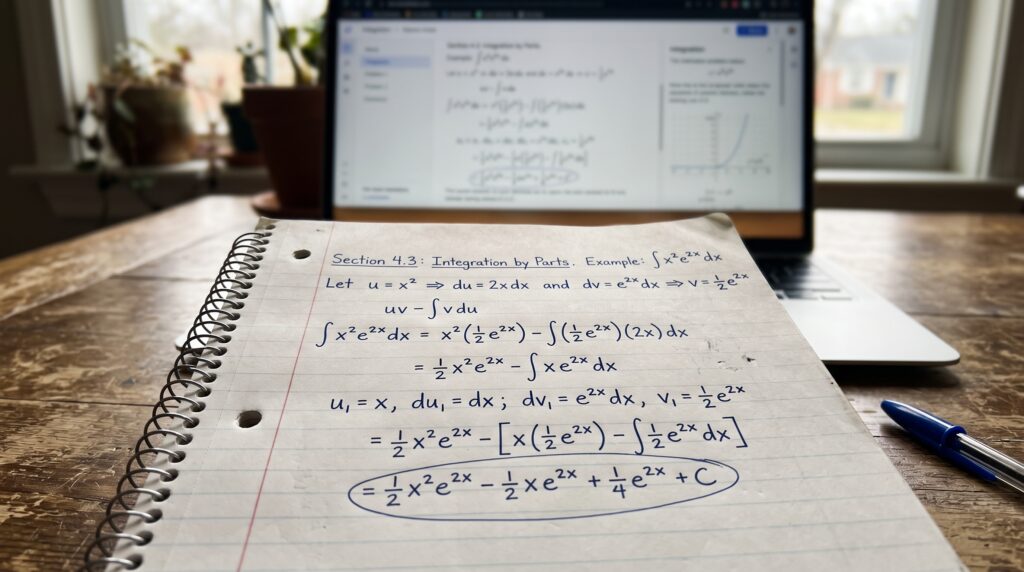
A step-by-step math tutor breaks a problem into its component parts instead of spitting out a solution. Type in an equation, a fraction problem, or a word problem, and the tool shows each move — what changed, why it changed, and what rule made that move valid.
That last part matters more than people expect. A calculator gives you 12. A step-by-step tutor shows you how you got to 12, which is the part that actually sticks in a student’s memory.
For grades 1 through 10, the math changes shape constantly — counting and basic addition in early grades, fractions and ratios by middle school, algebra and early geometry by high school. A tool covering that full range needs to flex its explanations to match where the student actually is, not just spit out a generic solution format.
Multiple Solution Methods: Why One Right Answer Isn’t Always Enough
Here’s where the tool goes further than a typical calculator-with-steps site. The same problem can now be solved using more than one method, and you can load whichever approach matches how the student is actually being taught.
Available methods include:
- American Common Core & Standard — the default approach most US students see in class.
- Cambridge International (IGCSE/GCSE) — the UK-style method, useful for students on a Cambridge curriculum.
- Singapore Math (Bar Modeling & CPA) — a visual, concrete-to-abstract approach that’s especially strong for word problems.
- Mental Math & Vedic Shortcut — faster calculation tricks, useful once a student already understands the underlying concept.
- Visual & Graphical / Geometric — a diagram-first method that helps students who understand shapes and pictures more easily than symbols.
This matters for a simple reason: not every student learns the same problem the same way. A kid who’s confused by the standard textbook method might suddenly “get it” the moment they see the same problem solved with a bar model or a quick mental-math shortcut. Comparing two or three methods side by side also helps students see that math has more than one valid path to the same answer — which, for a lot of kids, is the moment the subject stops feeling like a set of arbitrary rules.
Why Free, Step-By-Step Practice Beats Paid Tutoring Apps (Sometimes)
Paid tutoring has its place — a real person catching a specific misunderstanding is hard to replace. But it’s not always available at 9 PM on a Tuesday, and it’s not free.

A free tool wins on three things:
- Availability. No scheduling, no waiting for a session slot.
- Repetition. A student can run the same type of problem five times in a row until the pattern clicks.
- Low stakes. Kids ask “dumb” questions more freely to a tool than to a tutor watching them in real time.
The trade-off is that no automated tool replaces a teacher noticing a kid is anxious, distracted, or misreading the question itself. Use it as reinforcement, not a full substitute for classroom instruction.
How to Use a Step-By-Step Math Tutor Effectively
Dropping in a problem and reading the answer isn’t really learning. Here’s a sequence that gets more out of it.
| Step | What To Do | Why It Helps |
|---|---|---|
| 1 | Attempt the problem alone first | Reveals exactly where the confusion starts |
| 2 | Enter the same problem into the tool | Confirms whether your approach was on track |
| 3 | Read each step, not just the final answer | Builds the reasoning pattern, not just recall |
| 4 | If stuck, load a second solution method | A different approach can explain the “why” better than the first one did |
| 5 | Cover the solution and redo it from memory | Tests whether the concept actually transferred |
| 6 | Try a similar problem with different numbers | Confirms the skill generalizes, not just memorized |
Skipping straight to step 2 is the most common mistake. It feels efficient, but it trains a student to look up answers instead of building the underlying skill.
Common Mistakes Parents and Students Make With Tutoring Tools
A few patterns show up again and again:

- Copying the steps without reading them. The tool did the thinking; the student did the typing.
- Only using it for homework, never for review. Concepts fade fast without repetition spread over days, not just the night before it’s due.
- Skipping the “why” behind a rule. Knowing that you flip a fraction to divide is less useful than knowing why that flip works.
- Sticking with one method even when it’s not clicking. If Common Core phrasing isn’t landing, switching to the Singapore bar-model or visual method is often the faster fix.
- Treating every wrong answer as a failure. A wrong first attempt, corrected and understood, teaches more than a right answer copied blind.
Expert Tip: Match the Method to the Student, Not Just the Grade Level
Kids in the same grade can be years apart in math readiness — and they don’t all think in the same way either. A student who’s strong with numbers but weak on visualizing problems benefits from the Singapore or graphical method. A student who already understands the concept but is slow on execution benefits more from the mental-math shortcut. If a 7th grader is still shaky on fractions, start with whichever method actually makes the concept click, not whichever one the textbook happens to use.
Frequently Asked Questions
Is a free step-by-step math tutor as good as a human tutor?
For reinforcing a concept already taught in class, yes, in most cases. For diagnosing why a student is consistently confused, a human tutor who can ask follow-up questions still has the edge.
What grade levels can use this kind of tool?
A tool built for grades 1 through 10 covers early arithmetic, fractions and decimals, pre-algebra, algebra, and early geometry — the core math sequence most students move through before high school-level advanced math.
What are the different solution methods available?
The tool can solve the same problem using American Common Core, Cambridge IGCSE, Singapore Math (Bar Model/CPA), Mental Math & Vedic Shortcut, or a Visual & Graphical approach, so students can pick whichever explanation matches how they’re being taught or how they learn best.
Why would I need more than one solution method for the same problem?
Different methods explain the same logic in different ways. If the standard method doesn’t make sense, a visual or bar-model version of the same problem often does — without changing what’s actually being taught.
Does showing the steps actually help kids learn faster?
Yes. Seeing the reasoning behind each move helps students recognize the same pattern in a different problem later, rather than only recognizing the exact numbers they’ve seen before
Can this replace a math tutor completely?
Not entirely. It’s strongest as daily reinforcement and homework support. A human tutor still adds value by spotting confusion the student can’t articulate themselves.
How often should a student use a step-by-step math tutor?
Short, frequent use — a few problems a few times a week — beats one long cram session. Spaced practice is what makes math stick.
What if the tool’s explanation doesn’t match how the teacher explained it?
That’s exactly what the multiple-methods feature is for — load the method closest to the classroom approach, or compare it against the alternative methods to see which one clicks.
Is it safe for younger kids to use without supervision?
For early grades especially, some light supervision helps make sure the child is actually reading the steps rather than just hunting for the final number.
Is this tool suitable for exam prep?
Yes, especially for identifying which specific step in a problem type keeps tripping a student up, and for matching the solution method to whichever curriculum the exam is based on (Common Core vs. Cambridge, for example).
The Bottom Line
A step-by-step math tutor works best as a daily habit, not a homework emergency button. With multiple solution methods now available, it’s also flexible enough to match how a specific student actually learns — not just one fixed way of explaining a problem.
Try the free step-by-step math tutor for grades 1–10 on Hasan Drops and see which method makes the concept click.