
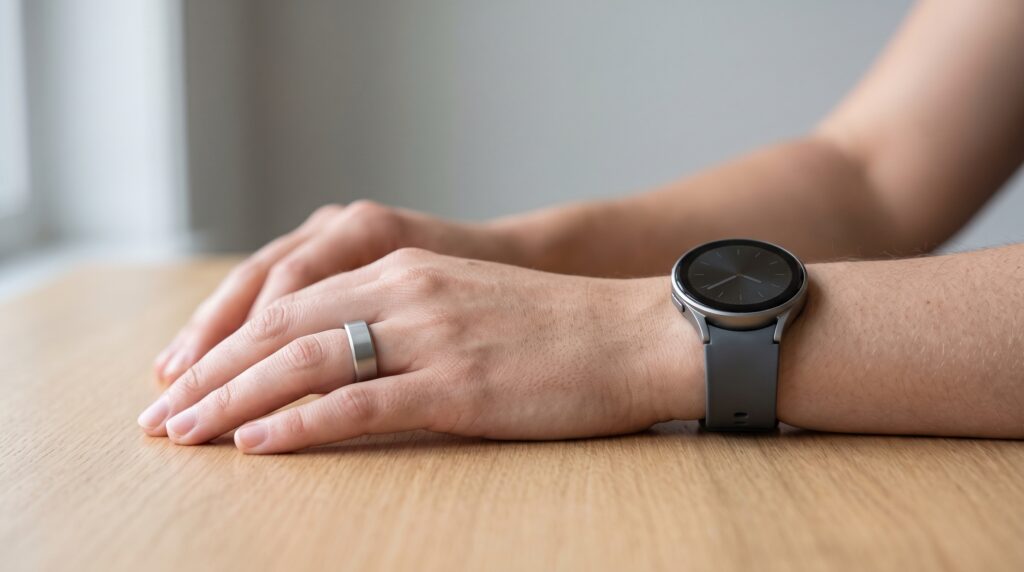
If you’ve scrolled through your feed lately, you’ve probably noticed something odd: fewer wrists, more fingers. AI health rings have quietly become one of the biggest stories in wearable tech, and a lot of people are asking the same question — is an AI health ring vs smartwatch debate even worth having anymore, or has the ring already won?
Short answer: it depends on what you actually want from a wearable. Rings win on comfort, sleep tracking, and battery life. Smartwatches still win on notifications, apps, and real-time feedback. Neither one is “better” in every category, and that’s exactly why so many people are confused in 2026.
This guide breaks down what AI health rings actually do, how they stack up against smartwatches, and whether you genuinely still need both — or just one.
What Is an AI Health Ring, Exactly?
An AI health ring is a small, battery-powered ring packed with sensors that track things like heart rate, blood oxygen, skin temperature, and sleep stages. Unlike a smartwatch, it has no screen. Instead, it quietly collects data all day and night, then hands it off to an app where AI models turn raw numbers into readable insights.
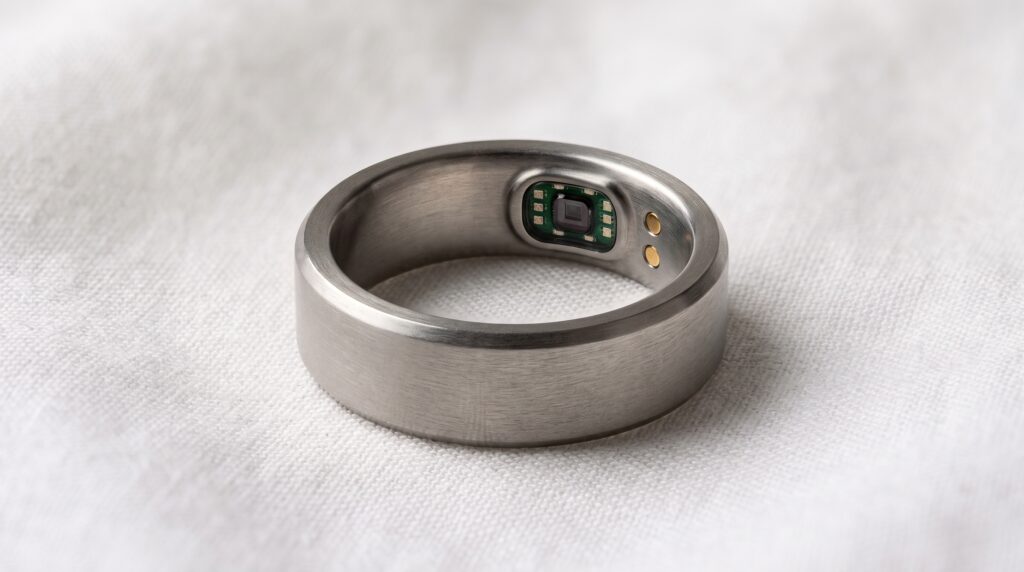
That AI layer is the real upgrade. Older fitness trackers just showed you numbers. Modern rings interpret them — flagging early signs of illness, spotting recovery patterns, or nudging you toward better sleep habits based on your personal baseline, not a generic average.
Popular models in 2026 include the Oura Ring, Samsung Galaxy Ring, and RingConn Gen 2, each leaning heavily on machine learning to personalize recommendations instead of just logging data.
Why Rings Became So Popular So Fast
A few things pushed rings into the mainstream this year. Battery life is the biggest one — most rings last 5 to 8 days per charge, compared to 1 to 2 days on many smartwatches. Comfort matters too, since a ring worn during sleep doesn’t dig into your wrist the way a watch strap can.
Consequently, sleep tracking accuracy has improved dramatically, which is a major selling point for anyone trying to fix their sleep schedule rather than just count steps.
AI Health Ring vs Smartwatch: The Core Differences
Here’s where the comparison actually matters. Both devices track health data, but they’re built for different jobs.
| Feature | AI Health Ring | Smartwatch |
|---|---|---|
| Battery life | 5–8 days | 1–2 days |
| Screen/notifications | None | Full display, calls, texts |
| Sleep tracking accuracy | Excellent | Good |
| Comfort for 24/7 wear | Very high | Moderate |
| Fitness app ecosystem | Limited | Extensive |
| Price range | $250–$400 | $200–$800 |
| Best for | Passive health monitoring | Active fitness + productivity |
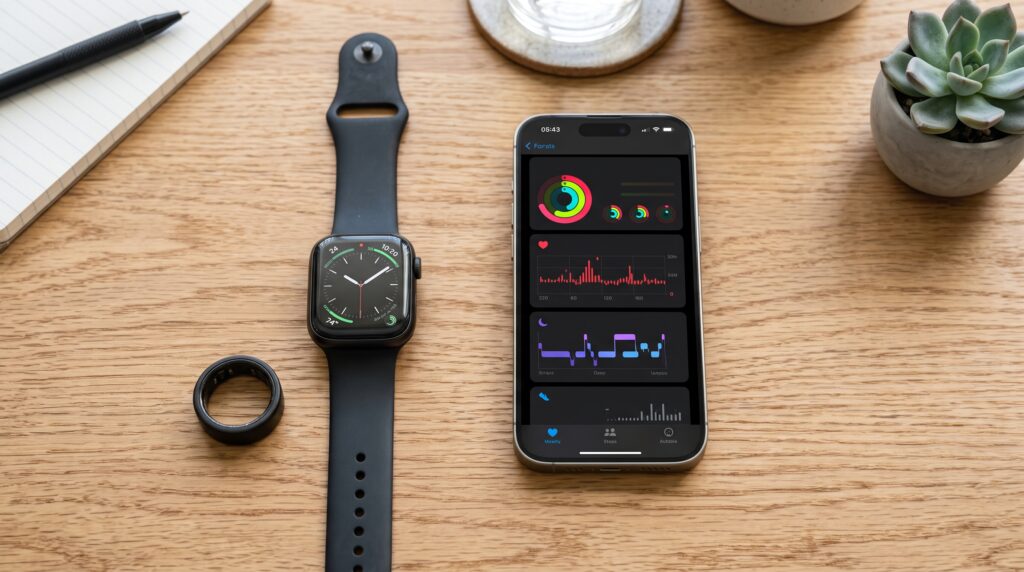
Essentially, a ring is built to disappear into your daily life while quietly gathering data. A smartwatch, meanwhile, is built to be interacted with constantly — checking messages, tracking a workout in real time, or paying for coffee.
Do You Still Need a Smartwatch If You Have a Ring?
Honestly, this depends on your lifestyle. If you mainly want to understand your sleep, recovery, and stress levels, a ring alone might be enough. But if you rely on real-time workout metrics, GPS tracking for runs, or phone notifications on your wrist, a smartwatch still does that job better.

Many people in 2026 are actually running both. The ring handles background health monitoring, especially overnight, while the smartwatch handles active tracking and daily convenience. It’s not always an either-or decision anymore — it’s becoming a layered system.
When a Ring Alone Makes Sense
- You prioritize sleep and recovery data over workout stats
- You dislike wearing anything bulky on your wrist
- You want multi-day battery life without daily charging
- You’re not dependent on wrist notifications
When You Still Need a Smartwatch
- You track runs, cycling, or GPS-based workouts regularly
- You want calls, texts, and apps on your wrist
- You use contactless payments through your watch
- You want a screen for real-time biofeedback during exercise
Expert Tips Before You Buy
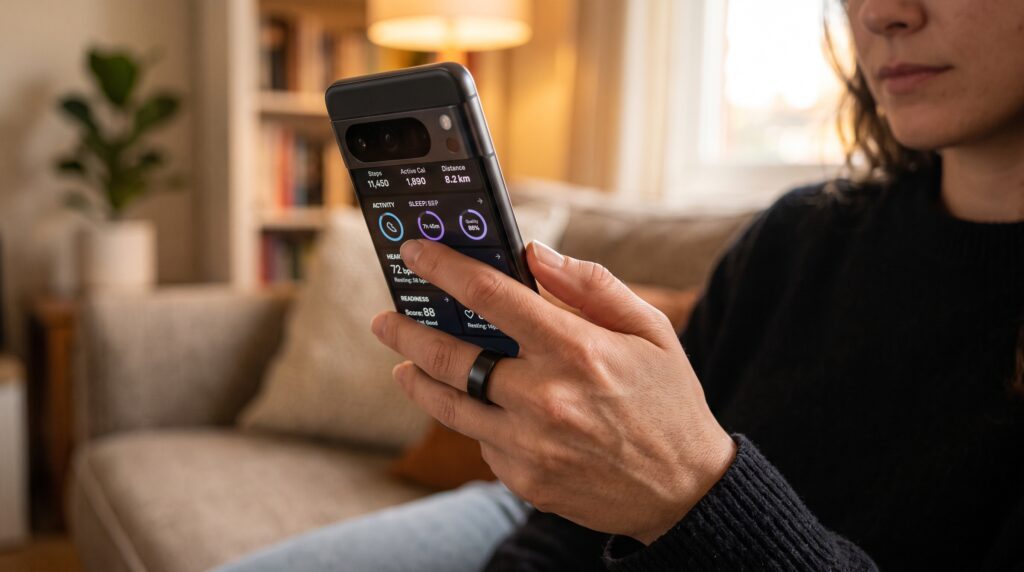
Before picking a side, think about how you’ll actually use the data. A ring is only as useful as the habits you build around its insights — if you never check the app, the sensor doesn’t matter.
Similarly, don’t buy a ring expecting workout tracking to match a dedicated fitness watch. It’s simply not designed for that. On the other hand, don’t expect a smartwatch to match a ring’s sleep accuracy, since wrist movement during sleep tends to introduce more noise into the data.
If budget allows, testing both for a month is the most reliable way to know which one fits your routine — subscriptions and return policies vary, so check those terms first.
The Verdict for 2026
Rings haven’t replaced smartwatches; they’ve carved out their own lane. If your main goal is understanding sleep, recovery, and long-term health trends, a ring is arguably the smarter, more comfortable choice. But if your day involves workouts, notifications, and quick access to apps, a smartwatch still earns its spot on your wrist.
The real trend in 2026 isn’t ring versus watch — it’s people combining both for a fuller picture of their health.
Thinking about upgrading your wearable setup? Compare a few models side by side before committing, and check out more AI wearable breakdowns on Hasan Drops to find the right fit for your routine.
Frequently Asked Questions
Is an AI health ring more accurate than a smartwatch? For sleep and recovery tracking, rings are generally more accurate due to reduced wrist movement. For active workout metrics, smartwatches still perform better.
Can an AI health ring replace a smartwatch completely? It can for people focused on passive health monitoring, but not for those who rely on notifications, GPS tracking, or app access.
How long does an AI health ring battery last? Most 2026 models last between 5 and 8 days per charge, depending on features used.
Do AI health rings track heart rate accurately? Yes, most rings use PPG sensors similar to smartwatches, offering comparable heart rate accuracy.
Are AI health rings waterproof? Most current models are water-resistant enough for showering and swimming, though depth ratings vary by brand.
Which is better for sleep tracking, a ring or a watch? Rings typically offer better sleep tracking due to a more stable, comfortable fit during rest.
Do I need a subscription for an AI health ring? Some brands, like Oura, require a monthly subscription for full insights, while others include most features for free.
Can I wear an AI health ring and a smartwatch together? Yes, many users wear both to combine passive health monitoring with active fitness tracking.
Are AI health rings good for beginners? Yes, they’re low-maintenance and require little setup, making them a good entry point into health tracking.
Will smartwatches become obsolete because of AI rings? Unlikely. Smartwatches offer functions rings can’t replicate, like notifications and app access, so both are expected to coexist.
Oura’s official product/research page (ouraring)